Aluminium Modular Kitchens vs Traditional Plywood Kitchens: An Objective Comparison for Bangalore Homes
For Bangalore homeowners dealing with variable monsoon humidity, heavy Indian oil-and-turmeric cooking, and persistent termite risks, precision-engineered aluminium modular kitchens deliver vastly superior durability, fire safety, and lifetime value compared to commercial plywood. While aluminium carries a 15–25% higher initial investment, it eliminates water swelling, termite damage, and VOC off-gassing, providing a verified 15-year structural warranty compared to standard 5–10 year plywood lifespans.
1. The Bangalore Climate & Culinary Context
Kitchen design in Bangalore is uniquely challenged by two distinct factors: the city's sub-tropical climate with prolonged humid monsoon cycles, and the intense thermal demands of traditional Indian culinary techniques.
High-heat tadkas, heavy steam from pressure cooking, and deep-frying introduce moisture and oil vapours into every corner of the kitchen cabinetry. In conventional plywood setups—even those utilizing Boiling Water Resistant (BWR) or Boiling Water Proof (BWP) grades—microscopic moisture ingress through edge bands causes core delamination, hinge screw loosening, and fungus propagation within 4 to 7 years.
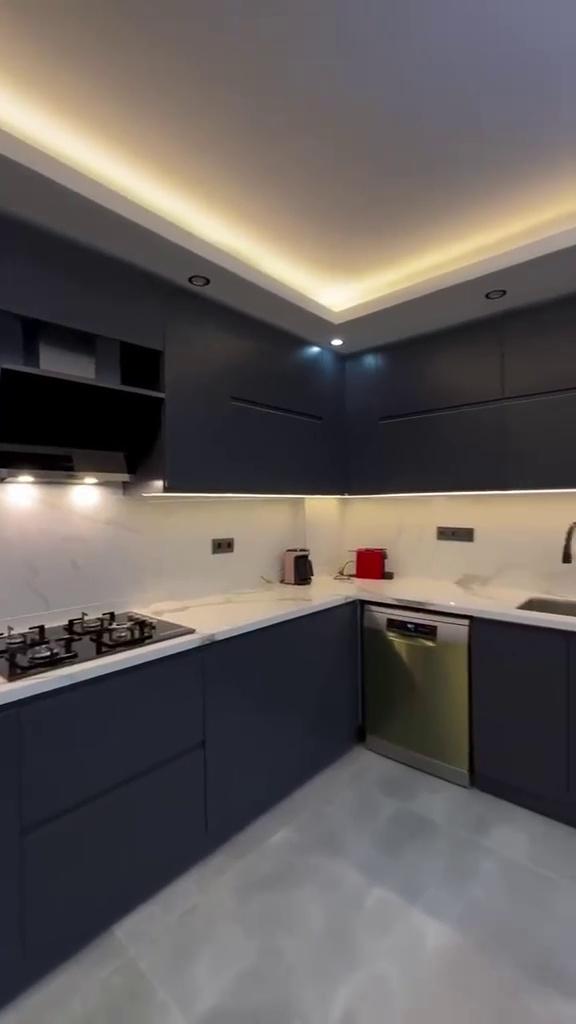
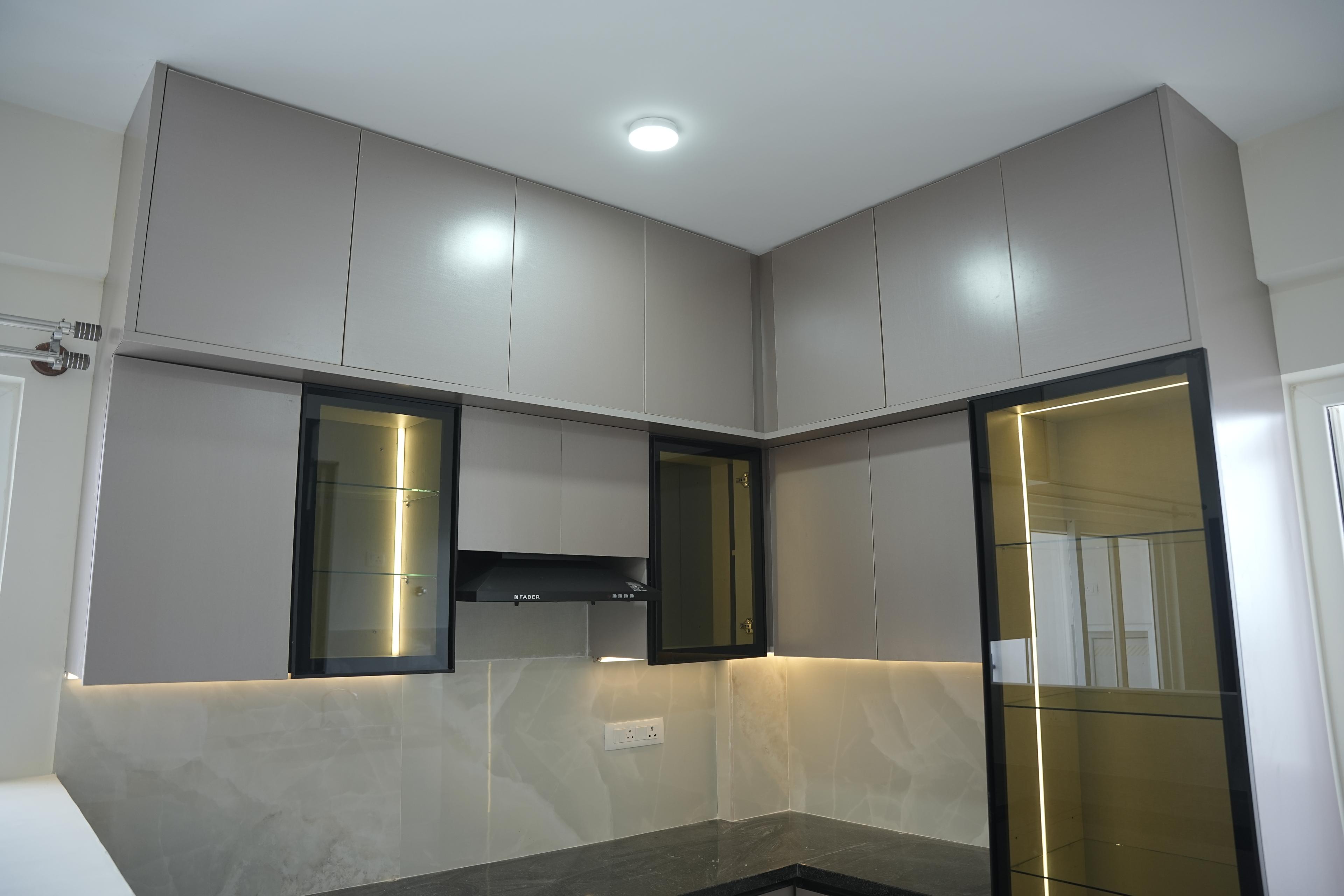
AfterBuild Studio engineers architectural aluminium modular kitchens using precision-extruded aviation-grade alloy profiles that remain completely inert to moisture, extreme heat, and ambient humidity fluctuations.
2. Comprehensive Material Comparison Matrix
To provide complete transparency for homeowners evaluating kitchen cabinetry for new residences or turnkey renovations, our engineering team has benchmarked aluminium modular systems directly against premium BWR/BWP plywood across seven mission-critical performance vectors.
| Performance Dimension | Precision Extruded Aluminium | BWR / BWP Marine Plywood |
|---|---|---|
| Water Resistance | 100% Waterproof (Zero core absorption, zero swelling) | Water-resistant but susceptible to edge-band failure and core swelling |
| Termite & Pest Immunity | 100% Pest Immune (Inorganic metal structure) | Vulnerable over time as chemical anti-termite treatments leach out |
| Fire Safety | Class A Fireproof (Non-combustible, does not emit toxic smoke) | Combustible timber core (Accelerates flame spread in kitchen fires) |
| Volatile Organic Compounds (VOCs) | Zero Formaldehyde / Zero VOCs (Completely inert) | Emits urea-formaldehyde resin gases from internal bonding adhesives |
| Structural Warranty | 15-Year Structural Carcass Warranty | Typically 5 to 10 Years limited warranty |
| Hardware Retention | Threaded machine screws into pre-tapped metal profiles (Never loosens) | Wood screws into wood fibres (Loosen over time with door weight) |
| Maintenance & Cleaning | Wipeable with mild soap or steam cleaners; stain resistant | Requires careful moisture control to prevent laminate lifting |
3. Fire Safety and Thermal Resilience
Kitchen fires represent one of the most critical residential hazards. Traditional plywood carcasses, despite laminate coverings, consist of organic cellulose fibres bonded by synthetic resins that ignite at approximately 230°C to 260°C.
Aluminium profiles used in AfterBuild modular kitchens possess a melting threshold exceeding 660°C. In the event of an accidental hob flair or electrical short-circuit behind an induction cooktop, the cabinetry will not propagate flame or emit poisonous hydrogen cyanide fumes.
4. The Economics: Initial Outlay vs 15-Year Lifetime Cost
A common concern among Bangalore homeowners is the upfront cost differential. A bespoke precision-engineered aluminium kitchen currently costs approximately 18% to 25% more than a high-end 710-grade BWP plywood kitchen with acrylic finishes.
However, when amortized across a 15-year ownership horizon, aluminium delivers significant financial savings. Plywood kitchens in high-use Bangalore households typically demand edge-banding re-gluing by year 4, hinge re-anchoring by year 6, and complete carcass replacement by year 10 due to sink-cabinet dampness. An aluminium carcass incurs zero structural degradation, resulting in a 40% lower total cost of ownership over 15 years.
Frequently Asked Questions
B.E. (Dr. Ambedkar Institute of Technology) • Architectural Systems Specialist
Directing architectural spatial planning, precision aluminium joinery, and turnkey residential handovers across Bangalore at AfterBuild Studio (Indiranagar, Bangalore).
Featured Portfolio Case Studies
Related Studio Services
Planning a Residence or Modular Kitchen in Bangalore?
Discuss your layout, material selection, or architectural alterations directly with our principal designers at our Indiranagar studio.